

Odisha's temples follow one style, Kalinga, and you learn to read it quickly: a tall curved tower over the shrine, a stepped roof over the hall in front. The crafts grew up beside the temples, painting, cloth and silver made for the gods and their festivals.
- Temple style
- Kalinga
- Konark Sun Temple
- UNESCO World Heritage
- Painting village
- Raghurajpur
- Silver filigree
- Cuttack's tarakasi
At a glance
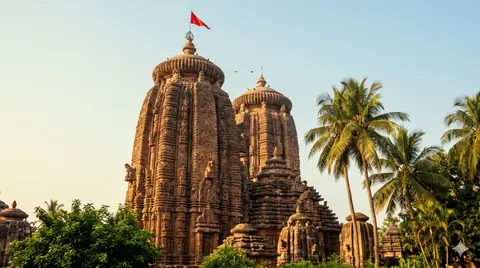 ArchitectureKalinga templesRekha, pidha and khakhara deulas
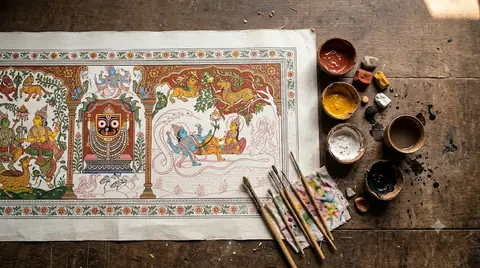 PaintingPattachitraPainted cloth in natural colours
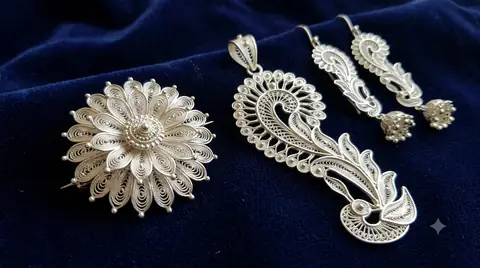 CuttackSilver filigreeTarakasi: jewellery of fine wire
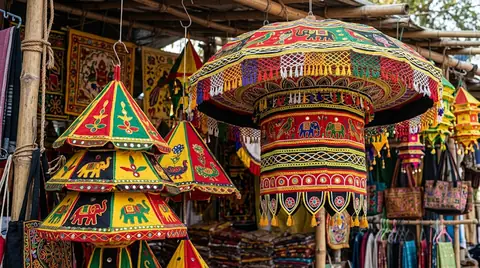 PipiliAppliqueCut cloth stitched in bright colours
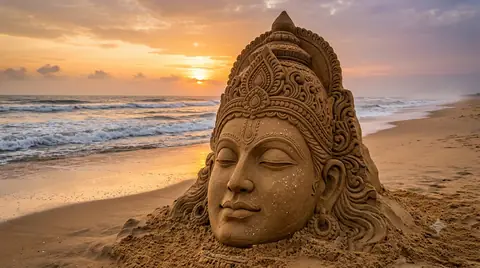 PuriSand artSculpture on the beach
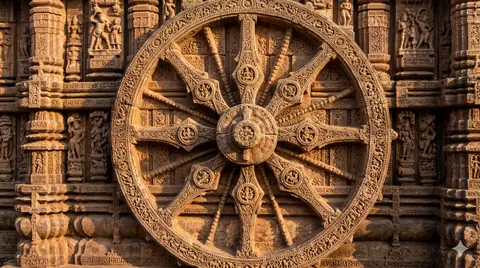 KonarkThree temples to knowLingaraja, Jagannath and Konark
Kalinga temple architecture

A Kalinga temple, a deula, is built as a set of halls in a line. Three shapes of roof tell you what each part is.
- Rekha deula: the tall tower with curved sides that rises over the sanctum, where the deity sits.
- Pidha deula: a lower roof made of stepped tiers, like a pyramid, over the jagamohana, the hall in front of the sanctum where worshippers gather.
- Khakhara deula: a long roof shaped like a barrel, used mainly for shrines of the goddess.
The walls are carved from base to top with deities, dancers, animals and scenes of daily life. Inside, by contrast, the sanctum is plain and dark.
Three temples to know
- Lingaraja, Bhubaneswar: the great temple of Shiva in the old town, with its tall rekha tower; Bhubaneswar has many smaller temples around it.
- Jagannath, Puri: the home of Jagannath, Balabhadra and Subhadra, and one of the four Char Dham.
- Sun Temple, Konark: built in the 13th century as a giant stone chariot for the Sun god, with carved wheels and horses. It is a UNESCO World Heritage Site.
In Koraput, the carved panels and murals of Sabara Srikhetra borrow from the district's tribal art.
Pattachitra

Pattachitra is painting on prepared cloth, in bright natural colours with fine borders, mostly of Jagannath and stories from the epics. The village of Raghurajpur near Puri is known for it: whole families paint, and the houses are decorated too. The same artists engrave palm leaves, the tala patra, with an iron stylus and darken the lines with soot.
Silver filigree of Cuttack

Tarakasi is Cuttack's silver filigree: fine silver wire twisted and bent into lace-like patterns and soldered into jewellery, boxes and ornaments for the gods. It takes patient hands, and the best pieces look like frost.
Pipili appliqué

In Pipili, between Bhubaneswar and Puri, craftspeople cut shapes from coloured cloth and stitch them onto a base, with small mirrors among them. The work began as canopies, umbrellas and banners for Jagannath's festivals, and the Ratha Yatra chariots still carry it; today the street is lined with lamp shades, bags and wall hangings.
Sand art

On the beach at Puri, sand artists build large sculptures of gods, faces and messages, often for festivals or news of the day. They last until the tide or the wind takes them.
Crafts close to Koraput
Kotpad, in Koraput district, weaves cotton dyed with natural colours; more on the food and dress page. The Tribal Museum in Koraput town shows the metalwork, ornaments and woven cloth of the district's communities.


