

Hastatanta, handloom, is woven in almost every corner of Odisha, and each region has its own cloth: tie-dyed ikat in the west, temple borders in Ganjam, silk for Jagannath near Cuttack, and in Koraput district a cotton dyed red-brown with the root of a tree. Here is what each region weaves and how to tell them apart.
- Odia word
- Hastatanta (handloom)
- Tie-dye weave
- Bandha, or ikat
- Koraput's weave
- Kotpad, natural dyes
- GI-tagged
- Kotpad, Sambalpuri, Bomkai and more
The weaves at a glance
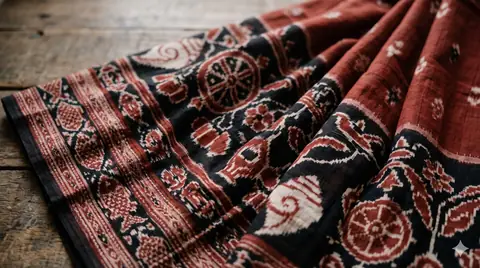 Western OdishaSambalpuri bandhaIkat with conch, wheel and flower motifs
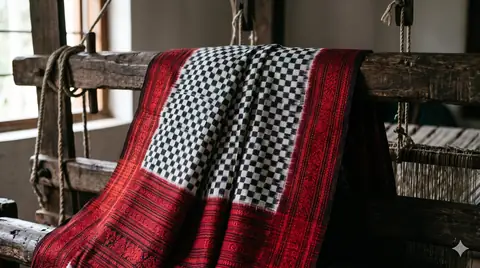 Western OdishaPasapalliIkat checks like a board game
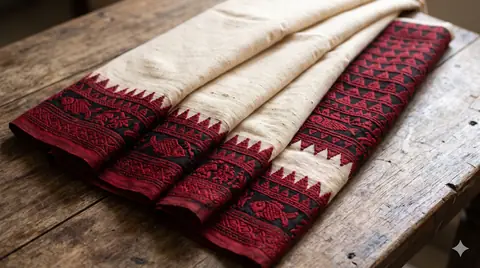 GanjamBomkaiMotifs woven into the border and end piece
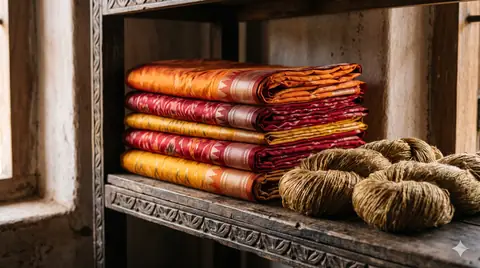 Cuttack and JajpurKhandua and tussarSilk ikat for Jagannath, and wild gold silk
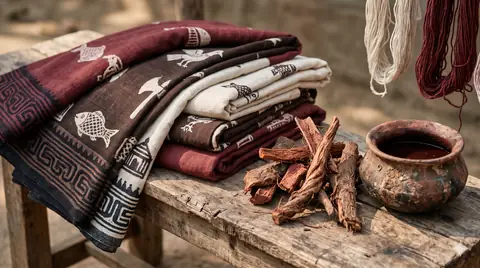 KoraputKotpadCotton dyed red-brown with aal root
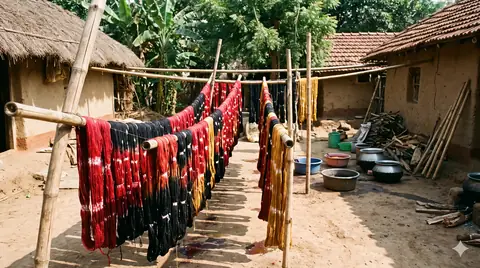 Across OdishaHow bandha is madeYarn tied and dyed before weaving
Bandha: the pattern is dyed before the weaving

Much of Odisha's handloom is bandha, the Odia word for ikat. Before anything goes on the loom, bundles of yarn are tied tightly in places and dipped in dye, so the tied parts stay undyed; tying and dyeing again builds up the colours. When the threads are woven, the pattern appears. Because every thread carries its share of the design, the edges look slightly feathered, and the back of the cloth shows the same pattern as the front.
When only one set of threads is dyed this way it is single ikat; when both the lengthwise and the crosswise threads are, it is double ikat, slower and harder, since the two patterns must meet exactly.
Western Odisha: Sambalpuri bandha and Pasapalli

The weaving villages of Bargarh, Sambalpur, Subarnapur (Sonepur), Boudh and Balangir make the cloth most people mean by "Odisha handloom". Sambalpuri Bandha sarees and fabrics are a registered Geographical Indication.
- Sambalpuri bandha: cotton or silk ikat, with motifs such as the shankha (conch), chakra (wheel) and phula (flower), and borders in strong reds, blacks and whites.
- Pasapalli: a check pattern of small squares, named after pasa, the board game it resembles.
- Sonepur: the district is known for fine silk and for weaving Bomkai designs as well.

Ganjam: Bomkai and Berhampuri Patta

- Bomkai: named after a village in Ganjam district. Its mark is the extra-weft work: designs woven into the border and the end piece (anchal) with extra threads, such as fish, temple and flower shapes, often on a plain or ikat body. Bomkai sarees and fabrics are a registered Geographical Indication.
- Berhampuri Patta: silk from Berhampur, known for the phoda kumbha border, a row of temple-shaped triangles. Berhampuri Patta is a registered Geographical Indication.
Around Cuttack and Jajpur: Khandua and Gopalpur tussar

- Khandua: silk ikat from Nuapatna and the villages around it in Cuttack district. It is woven for Jagannath, in some cloths with lines of the Gita Govinda worked into the pattern, as well as for people's own sarees.
- Gopalpur tussar: from Gopalpur in Jajpur district, woven from tussar, a wild silk with a natural gold-brown colour and a slightly rough feel.
Kalahandi: Habaspuri
Habaspuri cotton, named after Habaspur in Kalahandi district, carries kumbha (temple), fish and flower motifs in extra-weft work on the border and the body. It is a registered Geographical Indication.
Koraput: Kotpad

Kotpad, in Koraput district, weaves cotton dyed with natural colours only. The deep red-brown comes from the root of the aal tree, and black is added in the same way, so a Kotpad cloth usually reads as maroon, brown and off-white with bold, thick motifs woven in. The saree and the shawl-like cloths worn in the surrounding communities are the best-known pieces. Kotpad handloom is a registered Geographical Indication.
Natural dyes can bleed in the first washes, which is part of the cloth, not a fault; wash it alone in cold water the first few times.
Tribal cloth of the southern hills
The hill communities of southern Odisha have cloth of their own. Dongria Kondh women of the Niyamgiri hills embroider the kapadaganda shawl, and many communities weave on small looms at home. The Tribal Museum in Koraput town shows this cloth with the ornaments and tools that go with it.
The weaves side by side
| Weave | Region | Fibre | How the pattern is made |
|---|---|---|---|
| Sambalpuri bandha | Western Odisha | Cotton, silk | Ikat: yarn tied and dyed before weaving |
| Pasapalli | Western Odisha | Cotton, silk | Ikat checks |
| Bomkai | Ganjam, Sonepur | Cotton, silk | Extra threads woven into the border and end piece |
| Berhampuri Patta | Ganjam | Silk | Temple-shaped border |
| Khandua | Cuttack district | Silk | Ikat |
| Gopalpur tussar | Jajpur district | Tussar silk | Woven from naturally gold wild silk |
| Habaspuri | Kalahandi | Cotton | Extra-weft motifs |
| Kotpad | Koraput | Cotton | Natural dyes, woven motifs |
Telling handloom from powerloom
- Ikat edges: on handloom bandha the edges of the motifs are softly blurred, and the pattern shows almost the same on the back. A printed copy has sharp edges and a pale back.
- Small irregularities: slight changes in the weave and the colour are a sign of hand work.
- The label: look for the Handloom Mark, or a Geographical Indication label on GI-tagged weaves.
- Where you buy: Boyanika, the Odisha State Handloom Weavers' Co-operative Society, sells handloom from across the state.
Caring for handloom
- Dry-clean silk, at least the first time.
- Wash cotton by hand in cold water, alone for the first few washes, and dry it in the shade.
- Fold silk sarees in a different place now and then, so the folds do not wear through.


